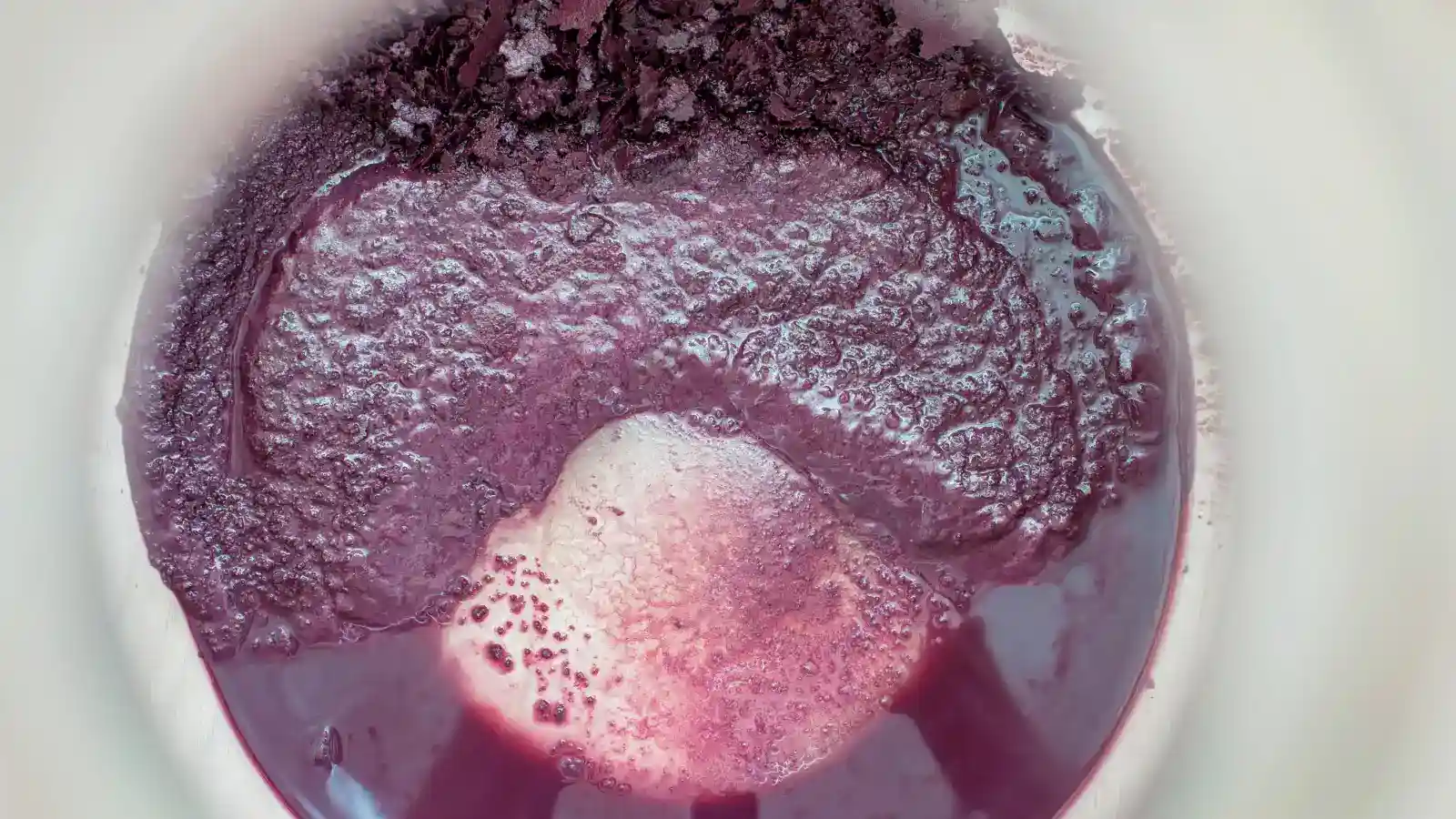
Wine lees, the value of the invisible

In winemaking, there are elements that are protagonists from the first sip, the grape variety, the barrel aging, the terroir… But there are also silent, discreet processes that occur in the shadows of the tank or barrel and that, however, profoundly mark the quality and personality of a wine. One of them is working with lees.
The lees are the set of sediments that are formed at the end of alcoholic fermentation. They are mainly composed of dead yeasts (after having transformed the sugars in the must into alcohol), remains of plant cells, potassium bitartrate and other solid compounds.
They are differentiated between coarse lees, which are deposited quickly and are usually removed at the end of fermentation, and fine lees, which are lighter and remain suspended for longer. It is precisely these fine lees that are used in ageing on lees (élevage sur lies, in French), a technique that is highly valued in both white and sparkling wines, and more occasionally in some reds.
During aging on lees, a process known as autolysis takes place, in which dead yeasts slowly decompose, releasing compounds that enrich the wine. Among the most outstanding effects of this practice, we can point out:
- Greater volume and greasiness in the mouth
The polysaccharides and mannoproteins released during autolysis act as textural agents. They help the wine gain body, roundness and that enveloping sensation, which is often perceived as creaminess.
- Aromatic complexity
The lees give the wine notes that go beyond the primary fruit. Descriptors such as toasted bread, brioche, butter, nuts, yeast, and even certain spicy or lactic nuances appear, depending on the contact time and whether or not the batonnage (periodic removal of the lees) has been applied.
- Physicochemical stability
Mannoproteins also have a positive effect on the tartaric and protein stability of wine. In addition, they act as natural antioxidants, reducing the need for sulfites and allowing a slower and more harmonious evolution.
- Increased persistence
The aftertaste of a wine aged on lees tends to be longer and more structured, with a more solid sensation in the center of the mouth and a greater retronasal aromatic persistence.
Ageing on lees is a common practice in several styles of wine, especially in whites with a gastronomic or ageing vocation, where the combination of fermentation in barrels and ageing on lees results in elegant and deep wines. More and more producers are opting for ageing on lees.
What role does batonnage play? Batonnage consists of periodically stirring the lees to keep them suspended inside the wine. This action promotes contact between the lees and the liquid, intensifying the release of beneficial compounds.
However, it depends on the style you are looking for. Excessive batonnage can overload the wine, make it heavy, or reduce its freshness. For this reason, many winemakers opt for static aging, where the lees rest without agitation, developing a more subtle and elegant profile.
Working with lees requires technique, sensitivity and patience. It is not just a matter of leaving the wine with its sediments, but of knowing when to intervene, how long to maintain contact and what style of wine you are looking to build.
When done well, the result is a more complex wine, with more nuances, texture and capacity for evolution. A wine that is not limited to liking, but generates conversation. That is not only drunk: it is analyzed, saved, remembered.
