Before the harvest
When we think of the harvest, the image is usually immediate, ripe bunches, scissors in the hands, boxes filling with grapes and an intense movement in the vineyards and in the winery. However, the harvest does not begin on the day the first grape is cut.
In Ribera del Duero, that moment is only the visible result of work that has been going on for many months. Before the first bunch leaves the vine, the vineyard has come a long way and winegrowers and technicians have made numerous decisions. Because harvesting means deciding when a whole year of work has reached its peak.
Winter leaves the vineyard at rest. The vines seem to stop their activity and the landscape of the Ribera del Duero takes on a calm, almost immobile appearance. But under this apparent calm, a new cycle begins to be prepared and the soil and the plant continue to be worked: winter pruning, cleaning and removal of vine shoots, tying and driving, fertilising, revision of the structure…
With the arrival of spring, the vineyard wakes up. The first shoots appear and a period begins in which each weather change can influence the evolution of the plant. Temperatures, rain, wind or a late frost are part of a scenario that no one can completely control. It is time for green pruning, pest prevention and frost protection work.
Then summer arrives and the vineyard enters a new phase. The bunches evolve little by little and the grapes begin to concentrate everything that, months later, will be part of the wine. It is the time for defoliation and thinning of bunches.
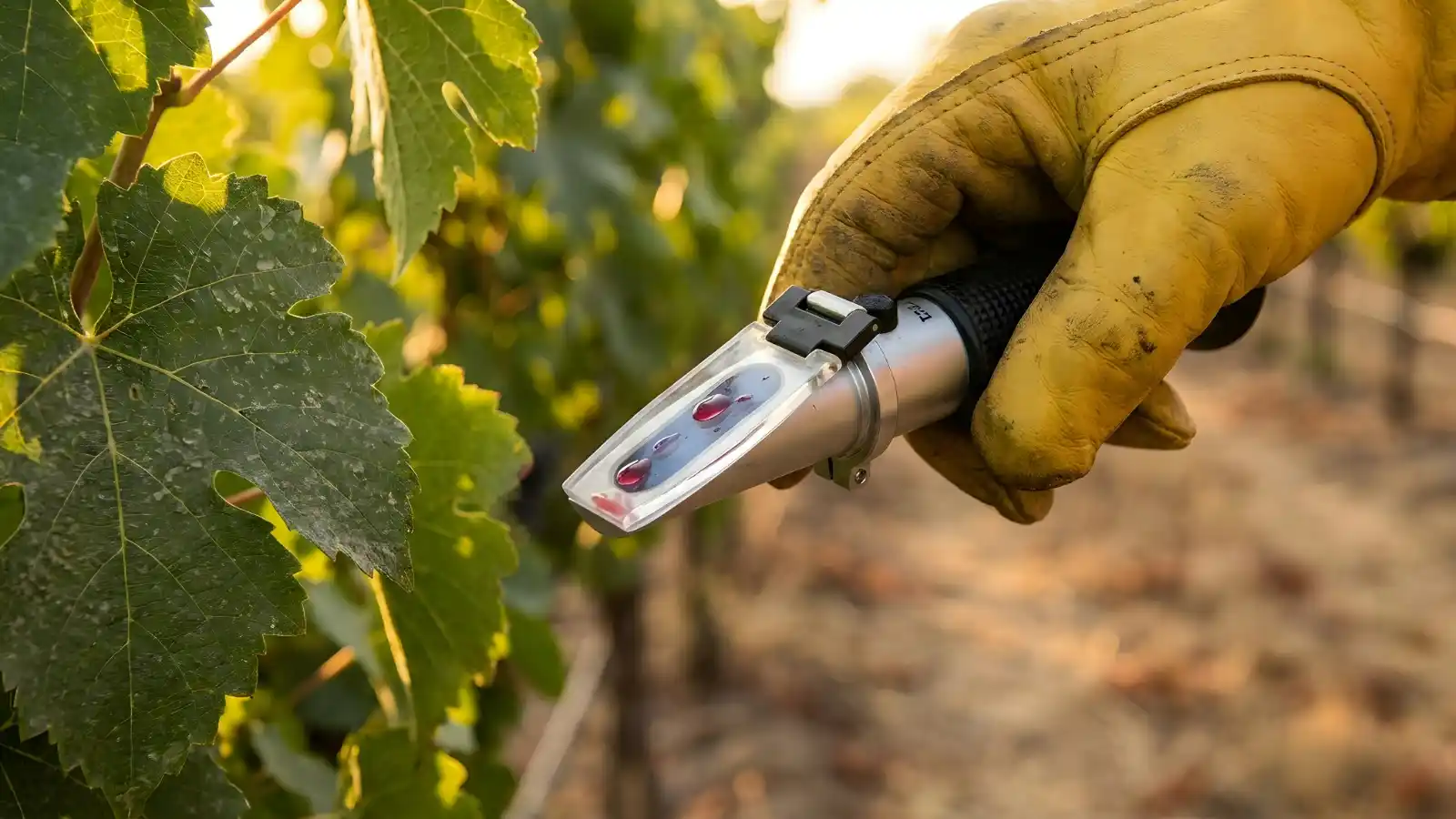
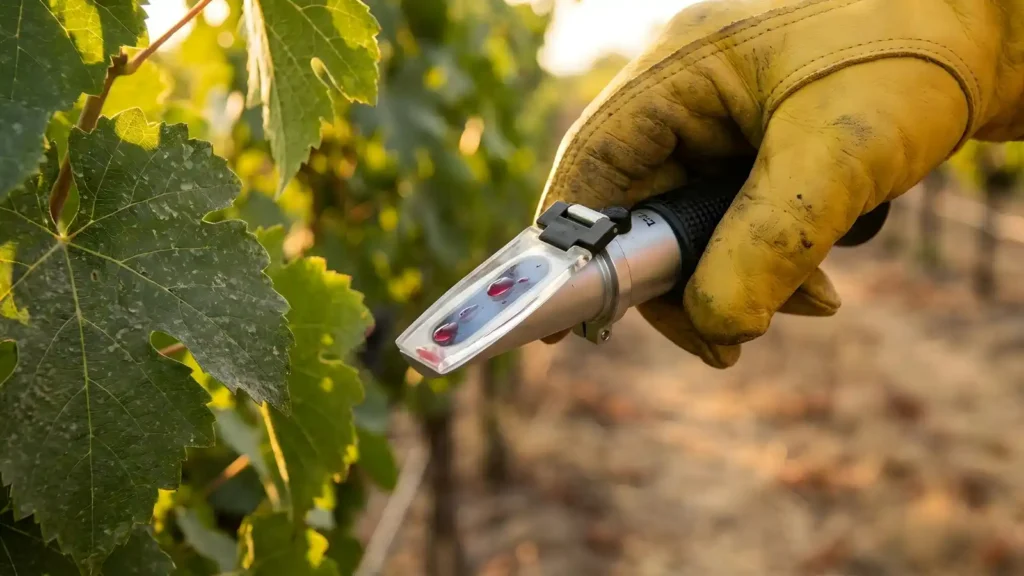
But even at this moment we cannot yet speak of a harvest. Perhaps the most delicate part remains, which is to observe and wait, since, in the last weeks, as the end of summer approaches, the vineyard begins to be observed with even greater attention. The grapes change almost imperceptibly from one day to the next, but these small variations can prove decisive. The bunches continue to evolve, the aromas develop and the composition of the grapes changes progressively. At this stage, the goal is to find a balance.
Waiting can allow the grapes to continue to evolve. But waiting too long can also change that balance. Harvesting earlier can preserve certain characteristics, although ripening may not yet have reached the desired point. During these weeks, the vineyard becomes a place of constant observation. The bunches are checked. Plots are compared. The evolution of the grapes is analysed. The state of the skins and seeds is observed. And, at the same time, the sky is looked at. A forecast of rain, several consecutive days of high temperatures or a sudden change in weather conditions can force us to rethink decisions. The harvest is prepared, of course, but it also requires the ability to adapt. For this reason, in the days leading up to the harvest, the weather forecast becomes another tool in the work in the vineyard.
The decision to harvest rarely depends on a single signal. It is the result of many observations, accumulated experience, knowledge of each plot and the ability to interpret what is happening at that precise moment.
In Ribera del Duero, moreover, the continental nature of the climate turns each vintage into a different story. The conditions of one year are never exactly the same as those of the previous one. A warmer summer, a particularly rainy spring or a period of milder temperatures in the last weeks can modify the rhythm of the vineyard.
A harvest is never simply a repeat of the previous one. Every year it forces us to look again, to compare again and to decide again. Not all the grapes arrive at the same time, within the same estate there may be differences between plots. The orientation, the type of soil, the age of the vines or the particular conditions of each area influence the rate of ripening.
This means that the question is not always only “when does the harvest start?”, on many occasions, the question is, where do we start?
Deciding which plot to harvest first is part of that invisible work that happens before the first grape is cut. The organization must allow each plot to be harvested at the time when it is considered most suitable and, at the same time, coordinate the arrival of the grapes at the winery.
That first bunch that leaves the vine does not only represent the beginning of the harvest. It represents a full year of work in the vineyard. Months of decisions, care and observation that culminate in an apparently simple moment: a pair of scissors, a bunch and the first grape that begins its way to the winery.
And behind the first grape there is a whole story that, months later, will be told again in a different way, in a glass of one of the excellent wines of Bodegas Montebaco.
