Organic wine in the Ribera del Duero
Organic wine has gone from being a curiosity in specialized stores to becoming a common choice among those who value sustainability, health and authenticity in the glass. But what is an organic wine really? What differentiates it from conventional wine? And why are more and more wineries opting for this way of understanding viticulture?
What is organic wine?
An organic wine is one made from grapes grown without pesticides, herbicides or chemical fertilizers. Organic farming methods are followed in its production, respecting the natural cycles of the vineyard, promoting biodiversity and avoiding aggressive artificial treatments.
To be certified as a certified organic wine, the winery must follow specific practices during winemaking. The use of sulphites is limited, non-permitted additives are excluded and processes that minimise environmental impact are committed. All of this is regulated by European regulations.
Benefits of organic wine. Choosing an organic wine is not just following a trend. It is a commitment to the planet, health and taste. Here are some of its advantages:
Respect for the environment. Sustainable wines are produced without polluting the soil or water. The absence of chemicals protects the auxiliary fauna and improves the health of the vineyard ecosystems.
Lower impact on health. As it does not contain pesticide residues or herbicides, organic wine is a cleaner and safer option. Ideal for those looking for a more natural and conscious consumption.
Best expression of terroir. Many experts agree, organic viticulture allows the grape to express more faithfully the character of the soil and climate. The resulting wines are more authentic, with defined aromatic profiles and no masking.
Support for the rural environment. Consuming organic wines from small wineries helps to keep the villages alive, generate local employment and preserve winemaking traditions that are part of the heritage.
Requirements to be an organic wine. For a wine to be considered organic, it must meet certain requirements throughout the process:
- Cultivation without chemical synthesis products
- Sustainable agricultural practices, such as groundcover and biological pest control.
- Organic winemaking, limited use of sulphites, native yeasts, minimal intervention.
- Official certification, with the European organic logo and the seal of the competent body.
This process of conversion to organic lasts at least three years. Only then can the wine be legally labeled as such.
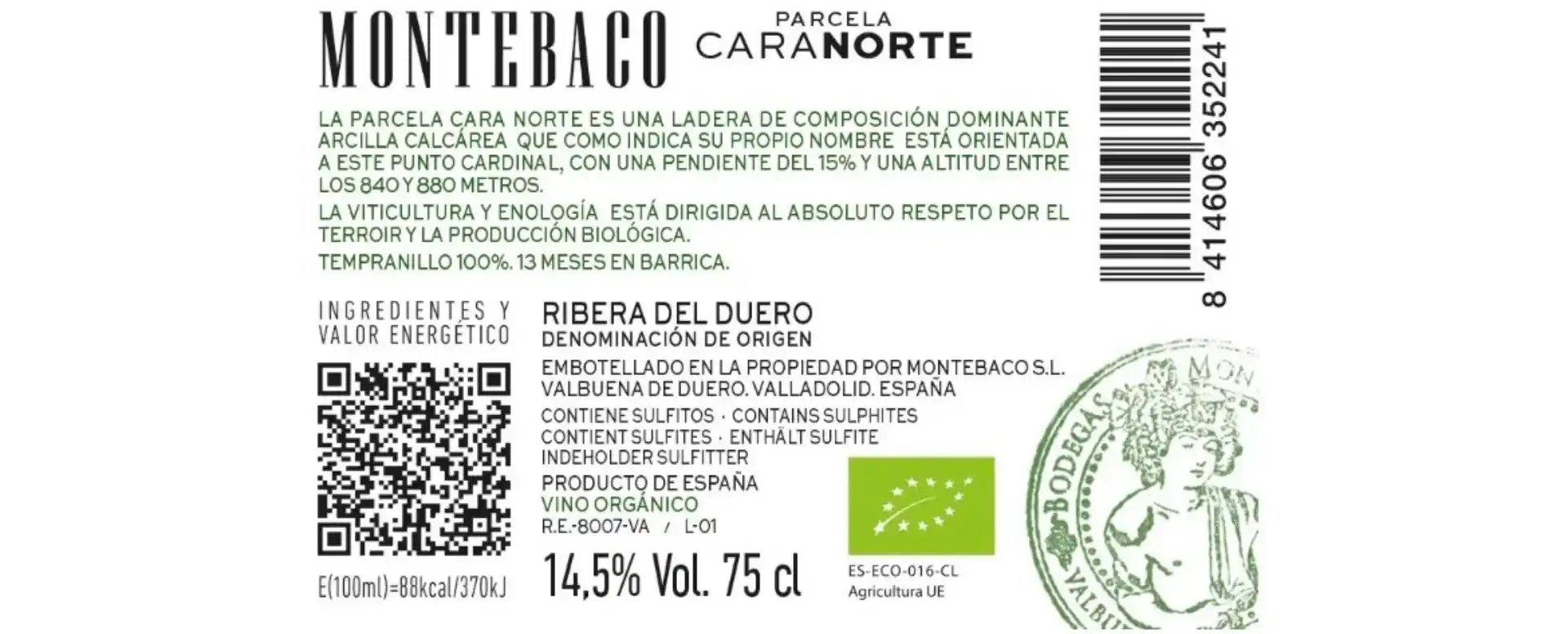
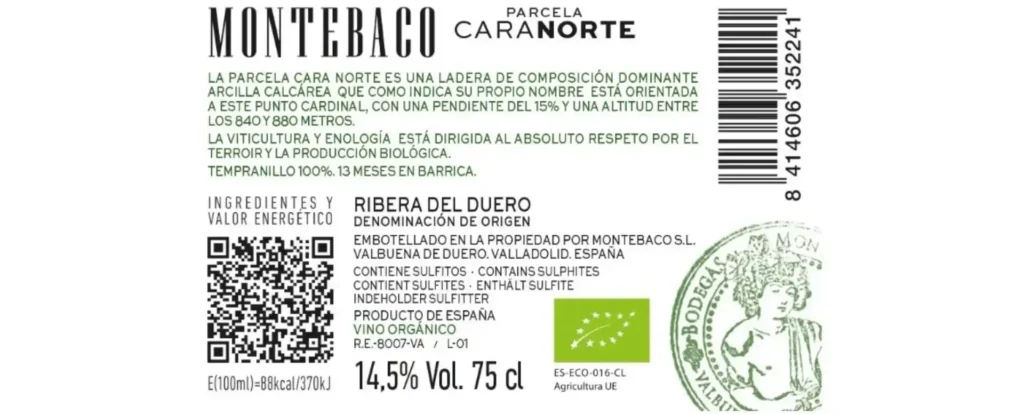
At Bodegas Montebaco we make CaraNorte, an organic high-altitude wine. This wine comes from vines grown organically at an altitude of more than 800 metres. The vineyards are located between Valbuena and Pesquera de Duero. The north orientation, together with a cooler climate, allows a slow and complete ripening of the grapes, resulting in a very clean aromatic profile, with red fruit, floral notes and a mineral background.
Montebaco CaraNorte not only meets the requirements of a certified organic wine, it also represents a way of understanding wine as an expression of place and respect for nature. It is a clear example of how a quality organic wine can compete at the highest level, without compromising the origin or the future of the vineyard.
Spain is one of the leading countries in terms of organic vineyard area worldwide. Every year, more wineries join this form of production, driven by the demand of an increasingly informed and demanding consumer.
Spanish organic wine is the result of a work philosophy that seeks to protect the environment, take care of the consumer and make wines with soul. Initiatives such as that of Bodegas Montebaco with CaraNorte wine are an example that it is possible to look to the future of wine without losing the connection with the land.
